ASYCUDA++ IMPLEMENTATION GUIDE
Ó UNCTAD - SITE (V1.15)
B.7
Community Computer Networks
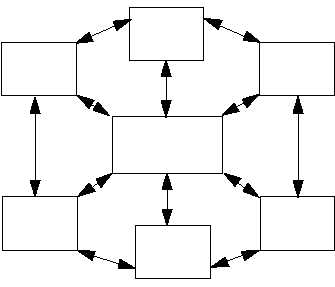
The potential benefits of EDI extend to all members of the trading community. As the use of EDI
expands, Customs can be seen as only one of a number of clients on a ‘Trade Community’
computer network who can receive data electronically and to which they usually ‘add value’ and re-
transmit.
ASYCUDA++
Customs
Trader
Shipping
Company
Bank
Customs
Broker
Port
Authority
Direct Trader Input (DTI)
The functionality of ASYCUDA, and the Client/Server architecture, makes the system ideal for
extensive use of Direct Trader Input. It is simple matter for the trader or Customs broker, in their
own office, to create, check and lodge an electronic declaration with Customs.
They can (depending on the system configuration) ‘request’ assessment electronically, the
declaration can be paid automatically upon assessment and release made immediately available -
all within a matter of minutes.
Through selectivity, and applying a process of rational thought to Customs risks and effective
control methods, the system offers the opportunity to make radical improvements to the
effectiveness of the operations of many Customs administrations.
Project teams are likely to meet considerable resistance to such changes, from within Customs and
also the trade. For instance, in many countries an organised or technically qualified Customs broker
network doesn’t currently exist. The introduction of new technologies and methods requires much
preparatory work. Implementation strategies often include an extensive information/education
program for the trade as well as Customs.
Within Customs, ‘Senior Management’ and ‘Risk Assessment and Targeting’ courses are highly
recommended as a medium to promote discussion on new Customs methods and providing for the
use of Risk Management techniques and targeted selection of declarations outside the
classification of normal trade.