MODCHQCF - NATIONAL CONFIGURATION
Ó UNCTAD - SITE (V1.15)
8.13
Licence
This function is not implemented at present.
Taxation Standards
This function allows the definition of Global and Item taxation rules, the Tariff layout and Column
Rule definition and the definition of the rules for the valuation note segments of the declaration.
See Appendix A for detailed advice on the steps involved in building a National
Taxation structure using ASYCUDA++.
Global and Item Taxation
While Global and Item taxation functions are similar, they display calculated charges in different
positions within the declaration. Global taxes are charged on the declaration as a whole,
independent of the item detail on the declaration, such as the Commodity Codes or the item values.
The ‘computer processing’ charge is a good example, where an administration can impose a
charge for processing a declaration. The total of Global taxes calculated for the declaration are
displayed as “Total fees” within the ‘Accounting details’ area of the SAD.
Item Taxation is usually linked to item details, such as Commodity Codes, values or quantities, but
independent of the normal Tariff structure or procedure codes. It provides extra flexibility in taxation
measures. When Item taxation applies it is calculated by the system and displayed under it’s own
code but with the other ‘normal’ taxes, within box 47 of the SAD, ‘Calculation of taxes’.
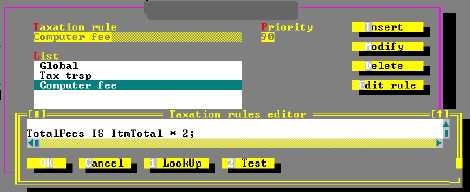
An example Global Taxation Rule is displayed in the screen following:
Global Taxation Rules
Fig 8.6 MODCHQCF: Functions: Taxation Standards: Global Taxation rules: Edit Rule.
Global Taxation Rules
The Global taxation rules specify the calculation of charges that apply to the whole declaration and
not just to the individual items. For example, these could include a flat rate charge per entry or a
charge based on the total of the duties and taxes on all of the items on the declaration.
See the 'Taxation rules editor' window in the previous example screen print.